CultivationFraming the Displaced: Katrina “Refugees”

In calling American citizens “refugees,” the media did more than misspeak—it reframed belonging itself.

Anthony Ogbo, PhD Author

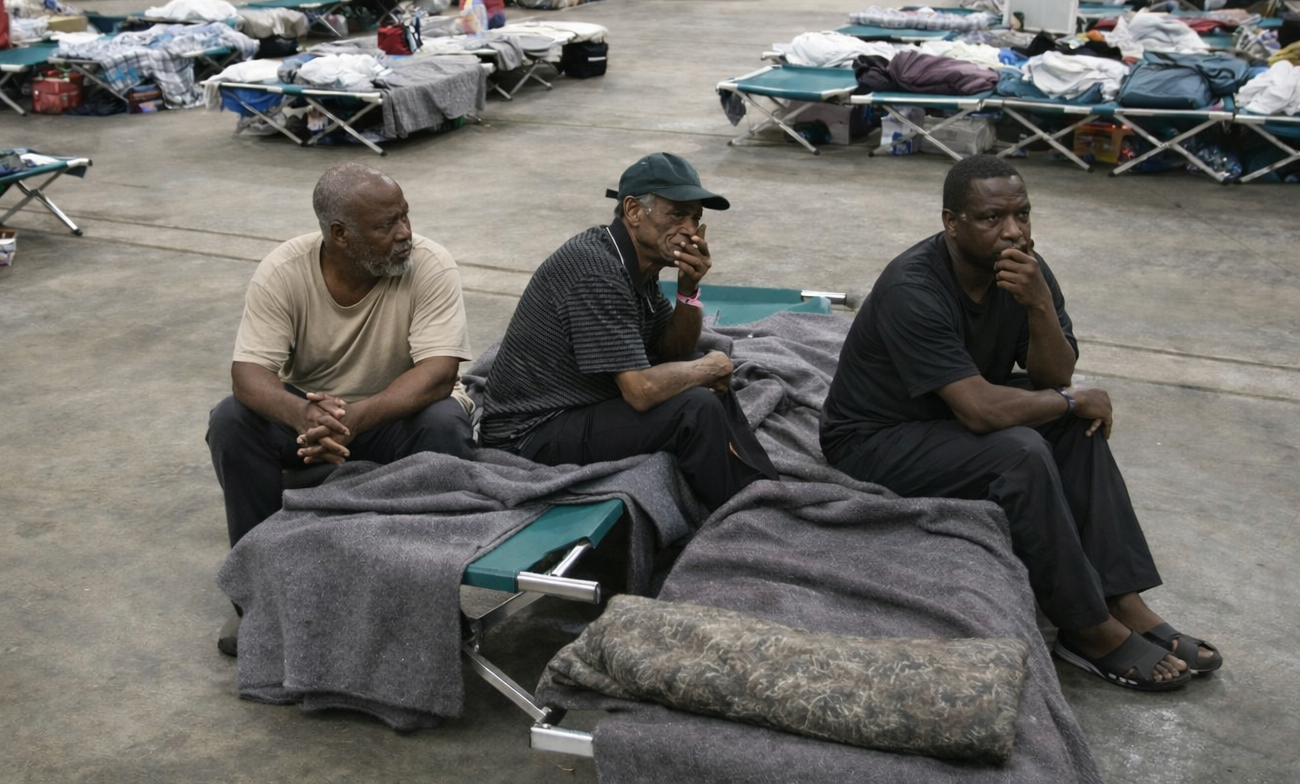
When Hurricane Katrina displaced hundreds of thousands of Louisiana residents in 2005, thousands were sheltered in Houston’s Astrodome. Almost immediately, much of the mainstream media began referring to these American citizens as “refugees.” The word choice may have seemed harmless or even descriptive amid the chaos, but it carried profound ethical consequences. Through the lens of media framing, the Katrina coverage reveals how language can distort reality, dehumanize victims, and reinforce racial and social hierarchies—often without overt intent.

Media framing theory explains how journalists select specific words, metaphors, and angles that influence how audiences perceive events. Frames do not merely describe reality; they actively construct it. In the case of Katrina, calling displaced citizens “refugees” framed them not as Americans failed by their government, but as outsiders—people somehow separate from the nation itself. Traditionally, the term “refugee” refers to individuals fleeing persecution or war across international borders. Applying it to Black Americans displaced within their own country subtly repositioned them as foreign, dependent, and less entitled to state protection.

Ethically, this framing violated a core principle of journalism: accuracy with context. The displaced Katrina survivors were not refugees under any legal, political, or civic definition. They were citizens forced from their homes by a natural disaster compounded by government failure. By mislabeling them, media outlets obscured the accountability of federal, state, and local authorities whose inadequate preparedness and response intensified the crisis. The “refugee” frame shifted attention from institutional failure to individual misfortune.

From a framing perspective, the refugee label activated what communication scholars call a “crisis-other” frame, positioning displaced residents as a social problem to be managed rather than citizens to be assisted.

The ethical harm deepened when this framing intersected with race. Most of the people housed in the Astrodome were poor and Black, and the refugee label echoed long-standing racialized narratives of Black Americans as perpetual outsiders within their own country. Scholars of media and race have long argued that language used to describe marginalized groups often draws from colonial or foreignizing vocabularies—terms that imply disorder, dependency, or threat. In Katrina’s coverage, this was reinforced by paired imagery: crowded shelters, people waiting in lines, and sensationalized reports of crime—many of which were later proven exaggerated or false.

From a framing perspective, the refugee label activated what communication scholars call a “crisis-other” frame, positioning displaced residents as a social problem to be managed rather than citizens to be assisted. This had real consequences. Public empathy became conditional, policy discussions shifted toward control rather than care, and stereotypes were amplified rather than challenged. Media ethics demand sensitivity to how frames can produce harm, especially during moments of vulnerability.

Alternative framing was not only possible but necessary. Referring to Katrina survivors as “displaced residents,” “evacuees,” or simply “citizens” would have preserved their civic identity and reinforced the government’s obligation to them. Such framing would also have aligned with journalism’s responsibility to “give voice to the voiceless” without stripping them of dignity. Ethical journalism is not neutral about language; it is deliberate, reflective, and aware of power.

The Katrina “refugee” narrative also illustrates the danger of default framing—when journalists rely on familiar terms under deadline pressure without interrogating their implications. Ethical media practice requires more than speed; it requires reflection. Words carry histories, and in moments of crisis, those histories matter even more.

Nearly two decades later, Katrina remains a case study taught in journalism and communication programs, not only for its coverage failures but also for the lessons it offers. Media framing is never innocent. It shapes public memory, policy outcomes, and collective empathy. The ethical responsibility of the press is not just to report what happened, but to frame it in ways that uphold truth, dignity, and accountability.

In calling American citizens “refugees,” the media did more than misspeak—it reframed belonging itself. And that ethical failure continues to echo long after the stormwaters receded.

Anthony Ogbo, PhD
Latest posts by Anthony Ogbo, PhD (see all)

Leave a comment:

Your email address will not be published. Required fields are marked *

Top

The Media Myth

Deconstructing the narratives that construct our world — “Media Myths” explores common misconceptions about how the media shapes public perception, truth, and bias. It critically examines misinformation, representation, and audience influence, promoting media literacy and encouraging audiences to question narratives and think critically about modern communication channels. A Master’s Project Submitted in Partial Fulfillment of the Requirements for the Master of Arts in Professional Communication and Digital Media (PCDM)

PROJECT AND SUPERVISION

Anthony O. Ogbo, PhD |  Project Study Researcher

Chris C. Ulasi, PhD | Project Supervision Committee Chair

Morgan D. Kirby, PhD  | Project Supervision Committee Member

Vincent Powell, MFA | Project Supervision Committee Member

SOCIAL MEDIA